
Zombie Rush: Idle Survival
DREAMWEAVE GAMES LIMITEDArcade
4.625.00 Reviews
- Version
- 0.0.18
- Installs
- 100.00K
- Age Rating
- Teen
Screenshots
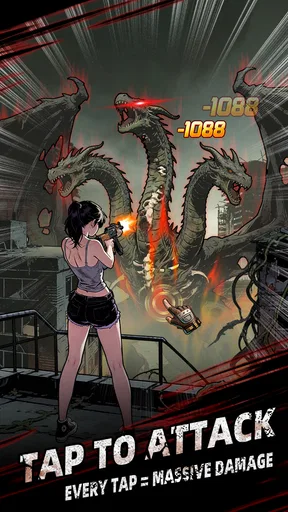
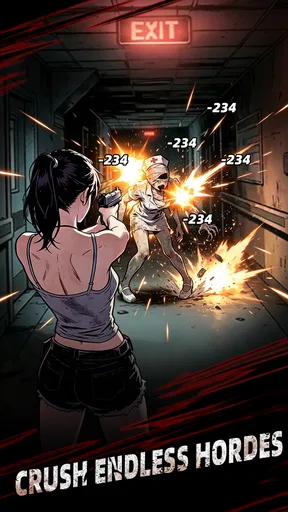
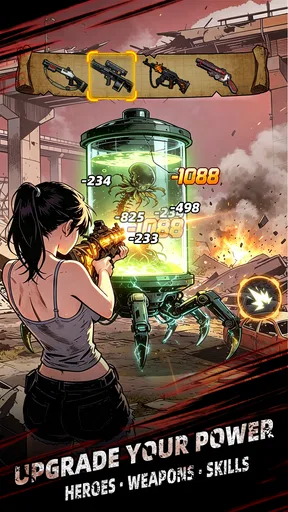
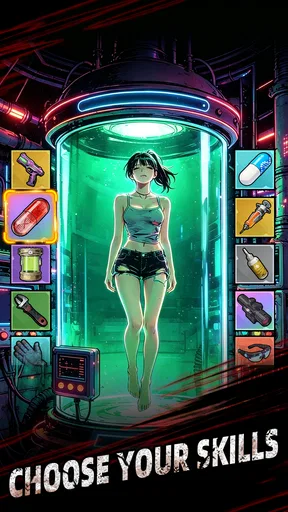
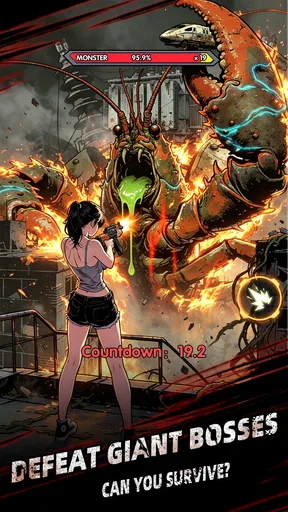
Our Review of Zombie Rush: Idle Survival
 Analysis by Appyee
My first few minutes with Zombie Rush: Idle Survival gave me a clear impression of a game built for quick decisions and repeat visits rather than long, uninterrupted sessions. It is an arcade game from DREAMWEAVE GAMES LIMITED, and its central appeal is easy to understand: zombies arrive, I tap to attack, and survival depends on keeping the pressure under control. That simplicity is useful on a phone because I can start playing without learning a complicated rule set.
The important detail is that the game’s mood depends on how well its fast action and idle-survival idea work together. I found myself looking for the point where tapping feels active instead of repetitive, and where the survival theme feels like more than decoration. When those two sides meet, the experience is pleasantly direct. When they drift apart, the game can feel more like a routine than a tense escape.
It is free to start and aimed at a Teen audience, so I would place it between a casual time-filler and a more focused zombie arcade game. The current version is 0.0.18, which also makes me approach it as a developing experience rather than a finished, content-heavy action game. That matters if you expect a deep campaign, a large narrative, or the variety of a full premium release.
How the visual world turns simple tapping into a survival mood
The strongest visual idea is the contrast between a lone survivor’s need to keep moving and the constant pressure suggested by a zombie crowd. Even when the basic action is straightforward, the setting gives each tap a purpose: I am not simply pressing a button for points; I am trying to create enough breathing room to remain in control.
That distinction is important in an arcade game. Without a recognizable threat, repeated actions quickly become empty. Here, the zombie setting gives the loop an immediate emotional frame. The visual language tells me to watch the danger, react quickly, and value survival over leisurely exploration. It is a compact kind of storytelling, using the situation rather than long explanations.
I also like that the theme supports short sessions naturally. A zombie rush is easy to understand when I have only a few minutes available. I do not need to remember a complicated plot before returning to the game. I can pick it up, read the situation, and get back into the rhythm of attacking and surviving.
Still, the setting has a limitation that is common in this style of game: the more the action relies on the same visual relationship between player, enemies, and target, the more important variation becomes. If every encounter feels visually identical, the zombie theme loses some of its urgency. For me, the best way to appreciate the presentation is to focus on how the pressure changes from moment to moment, not to expect a detailed world with exploration or environmental storytelling.
That makes this a better fit for players who enjoy readable arcade scenes than for people seeking a cinematic horror experience. I would not choose it as a substitute for a story-driven zombie adventure. Its world is functional and immediate, designed to support the action rather than compete with it.
Why the atmosphere works best in short bursts
The game’s world language is most effective when I play in small intervals. On a commute, while waiting for food, or during a short break, the zombie premise gives the session a clear beginning and purpose. I can enter the danger, make a series of quick choices, and stop without feeling that I have abandoned a large narrative chapter.
There is also a useful psychological effect in the survival framing. A normal arcade target can feel disposable, but zombies suggest accumulation: one enemy is manageable, while a growing group changes the entire situation. That makes the act of maintaining control more satisfying than simply chasing a high score. Even if the underlying actions remain simple, the setting encourages me to think about timing and pressure.
My practical tip is to avoid treating every session as a race to tap as quickly as possible. I get more from the game when I use the visual flow to decide whether I should continue attacking immediately or take a brief moment to understand the threat. That small pause can make the experience feel more strategic, even within an accessible arcade structure.
Sound and rhythm matter as much as the tapping
In a game built around repeated attacks, sound has an important job: it should confirm my actions, strengthen the sense of danger, and prevent the rhythm from becoming flat. The zombie setting gives audio a natural role because every encounter should feel like pressure closing in rather than a silent checklist of taps.
I pay attention to whether the sound design helps me read the pace. Clear feedback makes rapid play feel deliberate. Without it, tapping can become tiring because I am no longer sure whether each action has meaningful weight. A coherent audio rhythm also helps the game maintain its mood when the visual scene is simple.
For me, the best way to approach this kind of experience is with the sound at a comfortable level rather than muting it immediately. The audio can make the difference between an arcade session that feels lively and one that feels mechanical. At the same time, I would not recommend relying on sound alone when playing in public or in a quiet shared space. The game needs to remain readable visually, because the action is still primarily about what is happening on screen.
The pacing is where the idle-survival concept becomes especially interesting. Idle elements suggest that progress can continue without constant attention, while arcade elements ask me to stay involved. Those goals can pull in opposite directions. If the game demands nonstop tapping, the idle label feels less meaningful. If it resolves too much on its own, my actions lose urgency.
I found that tension more useful than frustrating when I treated active play as a way to influence the immediate situation, not as a requirement to perform every second. That approach gives the game two rhythms: a hands-on rhythm when I am watching the action, and a lighter maintenance rhythm when I only want a brief check-in. The balance is not ideal for every player, but it is the feature that gives the experience more identity than a basic tapper.
A concrete habit helps here: I play actively at the start of a session, use that time to understand the current pressure, and then decide whether the situation deserves continued attention. This is more comfortable than tapping automatically from beginning to end. It also makes the difference between an idle-survival game and a conventional arcade shooter easier to feel.
Where the mechanics fit and where they may wear thin
The core interaction is approachable. Tapping to attack needs almost no explanation, which is ideal for someone who wants immediate action. The zombie theme supplies the motivation, and the survival framing gives each encounter a simple question: can I keep the threat under control long enough to continue?
That accessibility is a real strength for new players. I can recommend it to someone who does not normally play complex action games but still wants a little tension. It is also suitable for players who prefer portrait-style mobile experiences and short repeated sessions, provided they are comfortable with a loop that may emphasize routine over discovery.
The trade-off is depth. A tap-based system can be satisfying when enemy pressure changes and my decisions matter, but it can become monotonous if the best answer is always to tap faster. I would skip this game if I needed precise movement, elaborate character builds, or a large collection of distinct combat tools. Those expectations belong more naturally to action RPGs, twin-stick shooters, or full survival games with exploration.
Compared with a conventional endless runner, this game’s appeal is less about navigating a route and more about managing an incoming threat. Compared with a traditional idle game, it promises a stronger feeling of immediate participation. Compared with a premium zombie title, it is easier to enter but unlikely to offer the same sense of scale or narrative investment. I see it as a middle option: more active than a passive progress screen, less demanding than a full action game.
Another practical point is the free-to-play structure. The game costs nothing to start, but it includes in-app purchases ranging from $0.99 to $99.99 per item. That wide range means I would approach optional spending carefully, especially if I were introducing the game to a younger player. The Teen content rating is worth noting for families, but an age label does not replace a conversation about purchase habits.
My advice is to decide before playing whether I am happy to experience the progression without buying anything. If the answer is yes, the free entry point is attractive. If I already know that slow progress will tempt me into repeated purchases, I would set a spending limit first. This is not a criticism of the game’s entire design, but it is an important part of deciding whether its long-term loop suits me.
Who will enjoy the survival loop most
I think the best audience is someone who likes zombie themes, quick arcade feedback, and games that can be checked several times during the day. The game works particularly well for a player who wants a low-friction routine: open it, respond to the threat, make a few taps, and leave when attention is needed elsewhere.
A realistic example is a short evening break after work. I might have enough energy for something interactive but not enough for a long competitive match. This game lets me enter a recognizable mood without committing to a full campaign. The survival framing makes the session feel more purposeful than endlessly scrolling through a menu, while the simple controls keep the mental load low.
It may also suit someone who enjoys watching a situation develop and then stepping in at the right time. The useful mindset is not “I must press constantly,” but “I should intervene when the pressure calls for it.” That turns the idle component into a pacing tool rather than an excuse to ignore the game.
I would recommend skipping it if I wanted a frightening horror atmosphere, a strong story, or extensive exploration. I would also look elsewhere if I disliked repeated actions, free-to-play purchase options, or games that may feel more like a daily habit than a complete adventure. A premium arcade game may be better for someone who wants a fixed experience without purchase decisions, while a deeper survival title may be better for someone who wants crafting and discovery.
Small habits that make the game feel better
My first tip is to watch the flow before committing to rapid tapping. The opening moments of a session are useful for identifying whether the current pressure is manageable or whether I need to stay fully engaged. This avoids turning the game into an automatic gesture and gives the survival theme more weight.
My second tip is to separate active sessions from check-in sessions. When I have time, I can focus on the action and enjoy the arcade rhythm. When I am busy, I can treat the game as a quick status visit rather than expecting a complete play session. This distinction helps prevent frustration because I am not demanding the same level of attention from every visit.
My third tip is to judge progress by control, not only by speed. A faster tap rate is not automatically a better experience if I am no longer paying attention to the threat. I get more satisfaction when my actions feel timed and purposeful, even if the underlying mechanics remain simple.
Finally, I would keep purchases separate from the emotional rush of a difficult moment. The zombie-survival mood is designed to make pressure feel immediate, and that is exactly when impulsive spending can seem tempting. Taking a moment before buying anything keeps the decision practical instead of letting the atmosphere make it for me.
What the current package says about its place on mobile
With over 100 thousand installs and an average rating of 4.6 from around 1 thousand ratings, the game has already attracted a meaningful audience for a compact arcade release. I read that as evidence that its basic idea is easy for players to understand and enjoy, not as a guarantee that it will suit every taste. Ratings are useful for spotting broad appeal, but my own expectations still matter more.
The release date is July 24, 2026, and the listed minimum operating system is Android 7.0. That makes the game accessible to people using older Android devices, at least at the platform level. I would still pay attention to how smoothly it runs on a particular phone, because fast arcade feedback feels much better when taps and visual responses remain consistent.
The developer, DREAMWEAVE GAMES LIMITED, has positioned the game around a very clear hook rather than a complicated explanation. That clarity is valuable: I know what kind of session I am getting before I invest much time. The downside is that a focused hook has less room to hide repetition. The longer I play, the more I need the pacing and progression to keep the central interaction interesting.
The game has around 25 written reviews, which is a smaller pool than its broader rating count. I would therefore use the overall reception as a general signal, while making my own decision based on the specific experience I want. If I am looking for a quick zombie-themed arcade loop, the concept is promising. If I need extensive evidence about long-term variety, I would remain measured rather than assuming the game will transform into a much larger experience.
My atmosphere verdict
Zombie Rush: Idle Survival works best when I let its art direction, zombie setting, sound, and pacing reinforce the same idea: danger arrives quickly, and my job is to regain control without turning every session into a major commitment. The game’s identity is not built on complex systems. It comes from making a simple action feel connected to a recognizable survival mood.
I appreciate that balance, but I also see the limits clearly. The experience is approachable, easy to revisit, and well suited to short breaks. It is less convincing for players who need rich exploration, a dramatic story, or deep combat variety. The free entry point is convenient, while the in-app purchase range means I would play with a clear personal spending boundary.
My recommendation is straightforward: try it if you want a compact arcade game with a zombie atmosphere and an idle-leaning rhythm. Give it a fair chance by playing in short, focused sessions and paying attention to how the pressure changes rather than tapping mindlessly. If that loop keeps you engaged, the game can become a pleasant mobile habit. If you are searching for a complete survival adventure, I would choose a more expansive alternative instead.
For the right player, its greatest strength is the way a simple tap becomes a small act of survival. That is not enough to replace a deeper zombie game, but it is enough to make this free arcade release worth a look when I want quick tension, clear feedback, and a mood I can enter and leave at my own pace.
Verdict
Strengths of Zombie Rush: Idle Survival
- Simple idle mechanics make progress easy with little active play.
- Short sessions suit quick breaks and casual mobile gaming.
- Multiple survivors and upgrades add variety to team building.
- Offline progress helps maintain momentum when you are away.
- Zombie-themed visuals and effects create an entertaining atmosphere.
Limitations of Zombie Rush: Idle Survival
- Progress may feel repetitive after extended play sessions.
- Higher upgrade costs can make later stages feel grind-heavy.
- Random rewards may slow access to specific survivors or gear.
- The screen can become visually busy during large zombie waves.
- Some players may find the idle gameplay lacks strategic depth.
Similar Picks in This Category
View All
Subway Surfers
SYBO Games4.6

Stickman Party 234 MiniGames
PlayMax Game Studio4.6

Subway Princess Runner
Ivy4.4

Temple Run
Imangi Studios4.2

Zombie Tsunami
Mobigame SAS4.6

Stack Ball - Crash Platforms
CASUAL AZUR GAMES4.5
Frequently Asked Questions
What is Zombie Rush: Idle Survival?
Zombie Rush: Idle Survival is a mobile survival game that combines zombie combat with idle and progression mechanics. You build and improve a team, collect resources, unlock stronger abilities, and fight through increasingly difficult stages. Much of the progress can continue automatically, making it suitable for players who enjoy short sessions as well as longer upgrade-focused gameplay.
Can I play Zombie Rush: Idle Survival offline?
The game may allow some battles or progression features to work without a constant connection, but online access is generally recommended for the complete experience. Internet connectivity can be required for advertisements, cloud saving, events, account features, rewards, updates, and purchases. Before downloading, check the current store description because offline functionality can change between versions.
Does Zombie Rush: Idle Survival include in-app purchases or advertisements?
Yes, players should expect monetization features such as optional in-app purchases and advertisements. These may provide extra resources, speed up upgrades, unlock bundles, or offer bonus rewards. It is possible to progress without spending money, although free players may need more patience because timers, limited resources, and difficulty increases can make advancement slower.
Is Zombie Rush: Idle Survival suitable for children?
The game is centered on zombie fighting and survival, so it may include cartoon-style violence, weapons, monsters, and frightening themes. Its suitability depends on the child’s age and sensitivity to this content. Parents should also review the listed age rating, advertising settings, chat or social features, and purchase controls before allowing younger players to download it.
What devices are required to run Zombie Rush: Idle Survival smoothly?
Zombie Rush: Idle Survival is designed for modern Android and iOS devices, but performance can vary depending on the phone or tablet, operating-system version, available storage, and background applications. Older devices may experience longer loading times, reduced frame rates, or crashes during extended sessions. Check the official store listing for the latest compatibility and storage requirements.
Play our best games!


